I first noticed Bryanna just after sunrise, when the forest surrounding Angkor Wat was still wrapped in soft mist. She sat low on a tree root, her newborn tucked close, the way mothers everywhere do when the world still feels too big for their child.
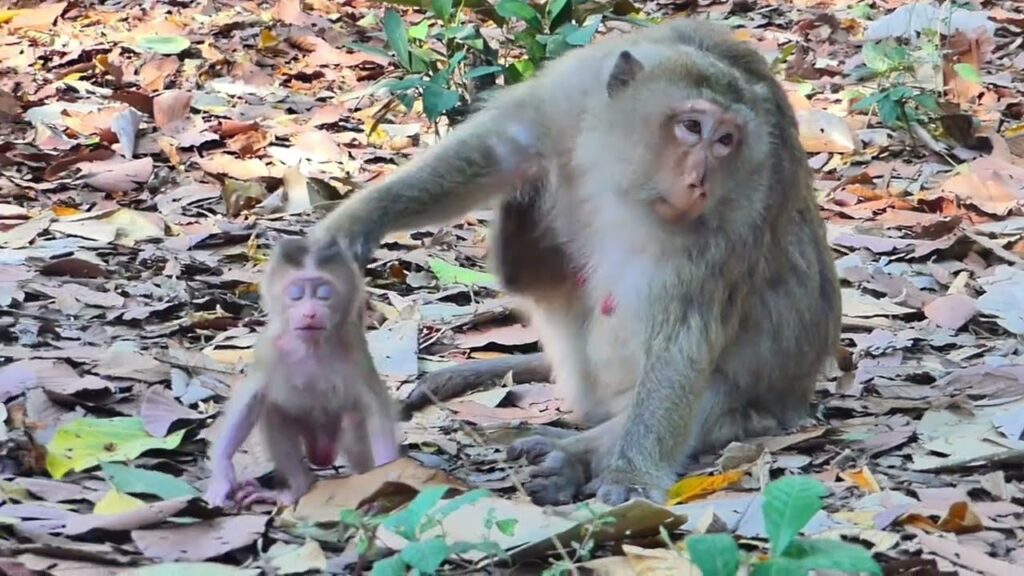
The baby’s legs trembled as they touched the ground. Not from fear—just from newness. Bryanna didn’t rush. She placed one hand lightly against her baby’s back, steady but loose, allowing space for learning. Every movement felt intentional, patient, and deeply familiar.
The newborn leaned forward, paused, then took a tiny step. Bryanna watched closely, eyes calm, posture relaxed. When the baby wobbled, she didn’t pull them back. She stayed close enough to protect, far enough to let confidence grow. It was a quiet lesson in trust.
Around them, the forest continued its morning rhythm. Birds called from above. Leaves shifted in the breeze. Yet within that wide, ancient space, everything seemed to narrow to those small feet finding balance for the first time.
The baby paused often, sometimes sitting back down as if unsure whether to continue. Each time, Bryanna waited. No force. No urgency. Just presence. Eventually, the baby rose again—because it wanted to, not because it was pushed.
Watching them, it was impossible not to think of human moments just like this: a parent crouched low, arms open, whispering encouragement without words. The language of learning to walk doesn’t need translation.
After a few careful steps, the baby leaned into Bryanna’s chest. She wrapped her arms around the small body, not as a reward, but as reassurance. Try again when you’re ready.
In the Angkor forest, where centuries have passed beneath these trees, a newborn monkey took its first steps—not toward independence, but toward confidence. And Bryanna, like mothers everywhere, understood exactly how to guide without leading.