
The morning air in the Angkor forest carried a gentle stillness, the kind that settles softly over ancient stones and towering roots. I had been sitting quietly beneath a fig tree when I noticed a tiny movement near the ground—a baby monkey, no bigger than a handful, exploring his world with careful curiosity.
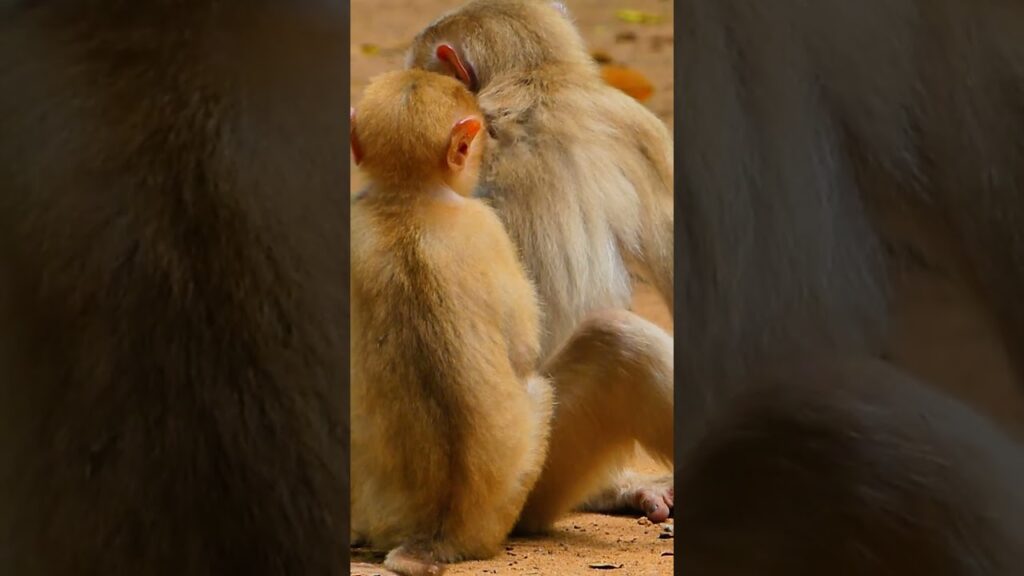
He paused often, as if every leaf and twig held a story worth understanding. A fallen flower became his first treasure. He picked it up, turned it in his tiny hands, and held it close, as though unsure whether to keep it or let it go.
Nearby, his mother watched without interruption. She didn’t rush him or call him back. She simply observed, her calm presence offering quiet reassurance.
At one point, the little one stumbled over a root. It wasn’t a dramatic fall—just enough to surprise him. He sat still for a moment, looking down at his hands, as if trying to understand what had happened. Then, slowly, he stood again.
And just like that, he continued.
There was something deeply familiar in that moment. Not the fall, but the decision to keep going. It felt like watching a small reflection of something universal—the quiet persistence that exists in all of us.
As the light shifted through the trees, the baby monkey found a patch of sunlight and sat right in it, warming himself. His eyes softened. His movements slowed. Eventually, he leaned gently against his mother, who wrapped an arm around him without hesitation.
There were no loud sounds, no urgency. Just a peaceful exchange of closeness.
Watching them, I realized how rarely we allow ourselves moments like this—moments without distraction, without pressure, without needing anything more than what’s already there.
In that quiet corner of the Angkor forest, a baby monkey reminded me that joy doesn’t arrive in big, dramatic ways. Sometimes, it lives in the smallest discoveries, waiting patiently to be noticed.