The Angkor forest was unusually quiet that afternoon. Sunlight filtered through the tall trees, and a group of macaques moved calmly above us, hopping branch to branch with practiced ease. One baby, no bigger than a loaf of bread, followed just behind its mother—curious, confident, and unaware of how fragile it still was.
Then it happened.
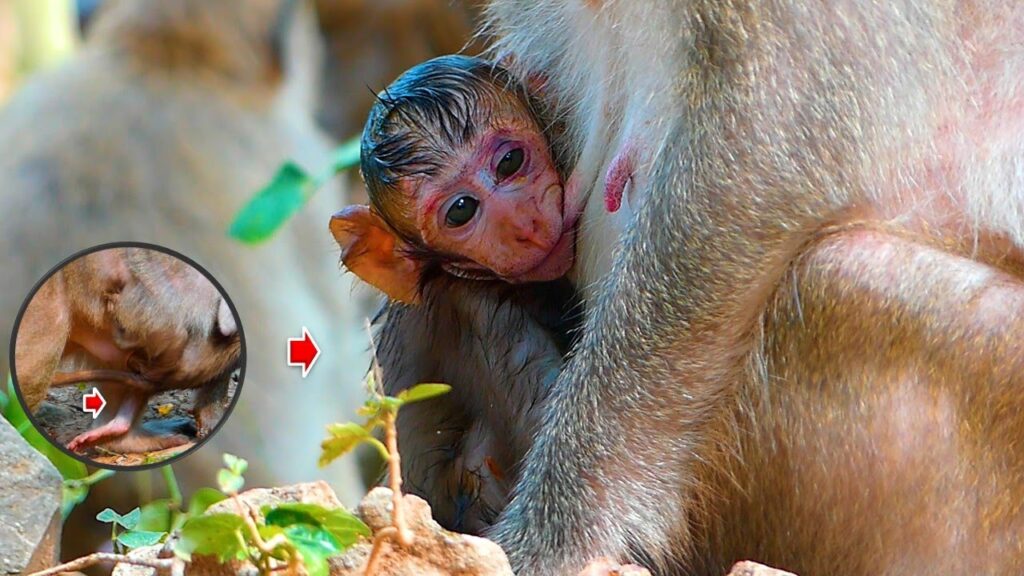
A branch bent slightly more than expected. The baby slipped—not far, but far enough. The sound was soft, almost swallowed by leaves, yet the moment froze everyone who saw it. The baby landed awkwardly on the forest floor and didn’t cry right away. It sat still, confused, as if trying to understand what had gone wrong.
The mother was down in seconds. She didn’t panic. She didn’t make noise. She simply reached for her baby and pulled it close, checking with gentle hands. The baby tried to stand, then stopped. One leg didn’t respond the way it should have.
What struck me most wasn’t the fall—it was the quiet afterward. No chaos. Just a mother adjusting her grip, lifting her baby carefully, and holding still long enough for the baby to rest its head against her chest. Other monkeys watched briefly, then returned to their routines. In the wild, life continues even when someone is hurt.
As the pair moved slowly away, the baby clung tighter than before. Each step the mother took was measured, protective. There was no drama in it—only patience. This wasn’t a moment meant for an audience, yet it felt deeply human.
In Angkor’s forest, there is no rescue team, no easy healing. There is only adaptation, care, and time. Watching that mother carry her injured baby away reminded me how early life teaches its hardest lessons—and how love shows up quietly, without asking for attention.