In the early morning light at Angkor Wat, the forest hums softly before the tour groups arrive. Mist hangs between ancient temple stones, and the macaques begin their daily search for fruit, leaves, and the occasional treat offered by visitors.
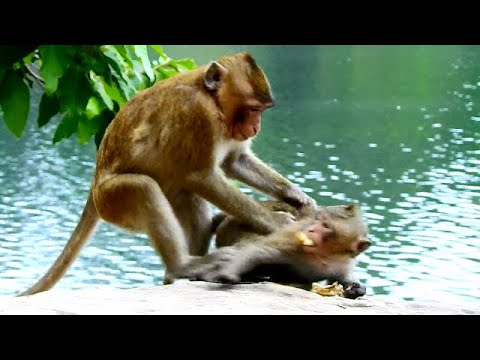
Baby Lucas is one of the youngest in his troop. His fur still carries that soft, golden tint of infancy, and his movements are filled with more curiosity than caution. That morning, he stayed close to his mother, watching as a familiar man—often called Mr. Chris by regular visitors—approached with food.
Feeding time always changes the mood.
The troop, usually relaxed and playful, becomes alert. Older juveniles move in quickly. Adults take position. Lucas, not fully understanding the tension, toddled forward with hopeful eyes.
What happened next unfolded in seconds.
As food was extended, competition surged. Mr. Chris made a quick motion to guide the stronger monkeys back, trying to prevent crowding. In the confusion, Lucas stepped too close. A firm hand redirected him away. It wasn’t gentle—but it wasn’t cruel either. It was hurried, reactive, and part of a chaotic moment.
Lucas stumbled backward, startled more than hurt.
His tiny face froze in confusion. For a brief second, he looked as though he might cry. His mother moved instantly—scooping him close, holding him tight against her chest. She scanned the area, protective and steady.
The forest grew quiet again.
Lucas clung to her fur, processing something new: the world isn’t always soft. Even familiar routines can shift in a heartbeat.
From where I stood beneath the banyan tree, it felt less like an act of harm and more like a reminder of how fragile the balance is between humans and wildlife. Feeding, though done with good intentions, changes behavior. It creates urgency where there might otherwise be patience.
Within minutes, Lucas peeked out from his mother’s embrace. A dragonfly caught his attention. His small fingers reached toward the air. The fear passed. Childhood returned.
Moments like these remind us that the Angkor forest is not a petting zoo. It is a living ecosystem, full of instinct, hierarchy, and lessons learned quickly.
Lucas will grow from this. He will learn when to step forward—and when to stay back.
And tomorrow, when the sunlight filters through the temple towers again, he will likely be playing as if nothing ever happened.