The morning light in the Angkor Wat forest arrives softly, filtering through layers of ancient leaves and stone. On this particular morning, it landed on a small monkey perched low on a branch, his tiny hands wrapped around the bark as if greeting the day itself.
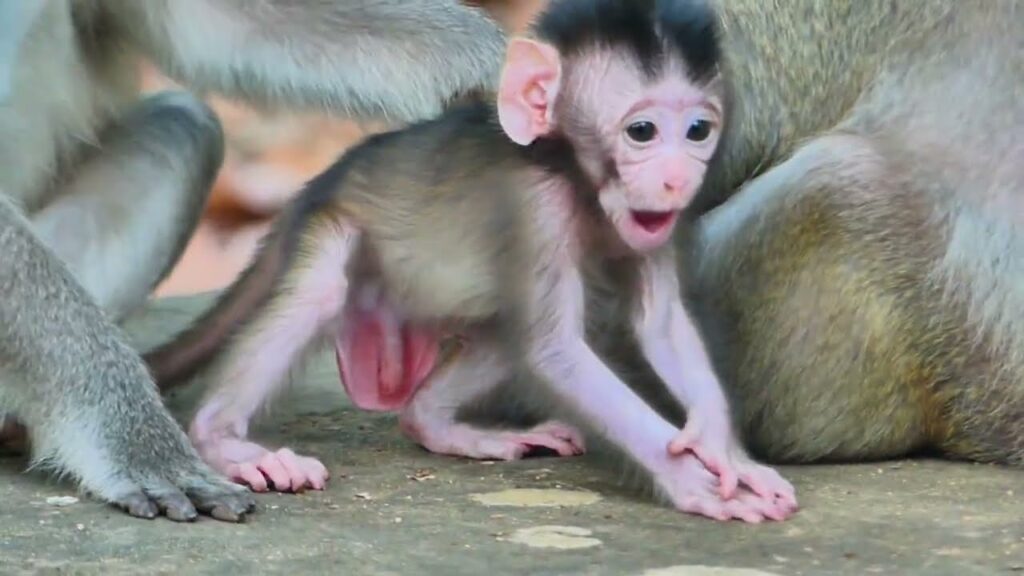
He wasn’t doing anything extraordinary. He wasn’t climbing high or calling out. He was simply there—sitting still, eyes bright, face relaxed, wearing an expression that looked unmistakably like happiness.
From a short distance, I watched him tilt his head toward the sounds around him: birds shifting overhead, leaves brushing together, the quiet movement of his troop somewhere behind him. Every few seconds, his mouth curled into a small, effortless smile. It felt unplanned, unguarded—the kind of joy that exists only when nothing is being asked of you.
His fur caught the sunlight in warm tones, and when a breeze passed, he leaned into it rather than pulling away. There was no fear in his posture. No urgency. Just a calm confidence that the forest was holding him exactly where he belonged.
What struck me most was how present he seemed. Humans talk often about mindfulness, about learning to stay in the moment. This little monkey didn’t need to learn it. He lived it. Each blink, each small movement, felt complete on its own.
At one point, he glanced toward me—not startled, not curious enough to flee. Just a quick acknowledgment, as if to say, I see you too. Then his attention returned to the world around him. A falling leaf. A distant call. The warmth of the branch beneath him.
In that quiet exchange, I felt something loosen in my chest. Watching him, I realized how rare it is to see pure contentment without performance. No audience. No reward. Just the simple experience of being alive on a peaceful morning.
Moments like this don’t ask to be shared, yet they feel important to remember. In the ancient forest of Angkor, where centuries of human stories are etched into stone, this tiny monkey’s happiness felt just as meaningful—soft, fleeting, and deeply real.