The morning light filtered softly through the tall trees near Angkor Wat, turning the forest floor a warm, gentle gold. Nothing felt rushed. Even the cicadas seemed to pause between sounds. That was when I noticed the baby.
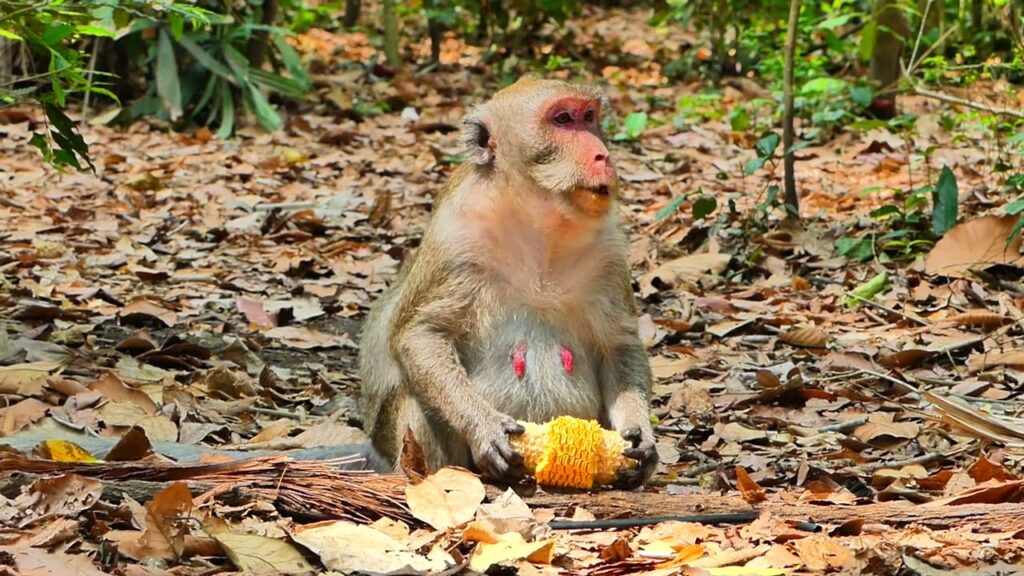
He was small, tucked close against his mother’s chest, one tiny hand resting on her fur as if to remind himself she was still there. She sat calmly on a low branch, her posture relaxed, eyes scanning the forest not with fear, but with familiarity. This was her home. This was their morning.
The baby shifted slightly, adjusting his position, then settled again. No cries. No tension. Just the quiet rhythm of breathing shared between mother and child. It was the kind of moment that often goes unseen—not because it’s rare, but because it’s gentle.
Around them, other monkeys moved about their routines. A cousin passed overhead. Leaves rustled. Life continued. Yet this small pair seemed wrapped in their own pocket of stillness. The baby’s eyes fluttered closed for a moment, then opened again, curious but untroubled.
Watching them, I felt the kind of calm that comes from witnessing trust without question. The baby did not cling tightly. He didn’t need to. His mother’s presence was steady, unquestioned, and enough. Her arm rested loosely around him, not holding, just being there.
Moments like this don’t ask for attention. They don’t perform. They simply exist. And in that quiet existence, they remind us of something familiar—how safety is often felt most deeply in silence.
As the sun rose higher, the mother adjusted her position, slowly, carefully, making sure her baby remained comfortable. He responded by relaxing further, his small body fitting perfectly against hers. The forest accepted them both, just as it has for generations.
Standing there, I realized this was not just a scene of wildlife. It was a reflection of something universal: how care is shown not through action alone, but through presence. Through staying. Through knowing when nothing needs to be done.