The forest around Angkor Wat wakes slowly. Morning light filters through towering trees, brushing the ancient stones with a soft, golden calm. On this particular morning, the stillness was broken by a small, uncertain sound—a baby monkey calling out, not loudly, but with a gentle persistence that carried through the roots and ruins.
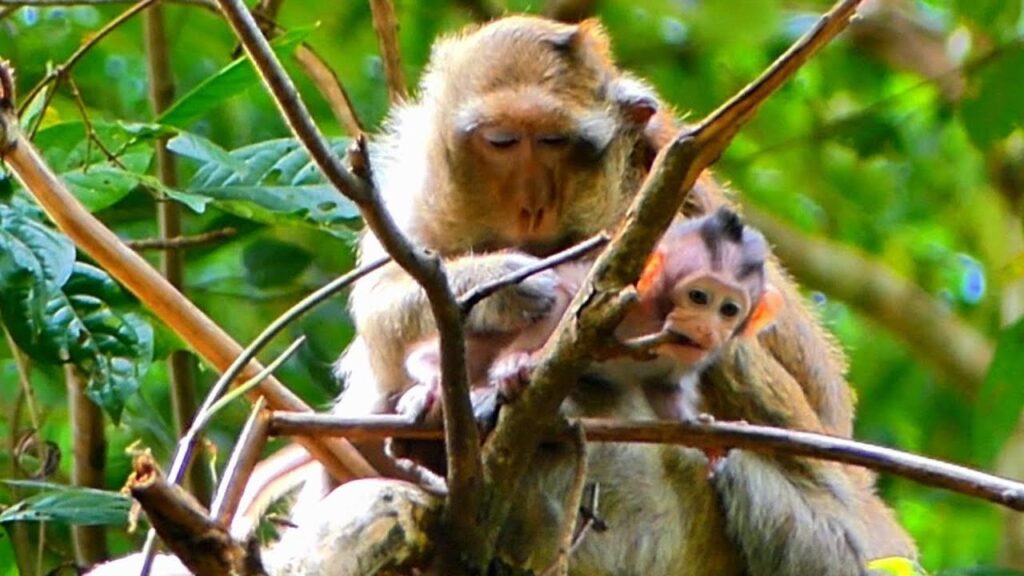
He sat low on a stone ledge, his tiny fingers curling against the cool surface. His eyes searched the space around him, wide and patient, as if he believed someone would answer if he waited long enough. There was no panic in his voice—only a quiet need, the kind that comes naturally to the very young.
I stayed still, watching from a respectful distance. In the forest here, moments like this unfold on their own time. The baby shifted his weight, pausing between calls, listening carefully after each one. Birds moved above him. Leaves stirred. The world continued, even as he waited.
It’s easy to forget how old this place is—how many lives have passed through these trees. And yet, in that moment, everything felt new again. This small life, framed by centuries of stone and moss, reminded me how tenderness survives across time.
Eventually, movement caught his attention. Not urgency—just awareness. His body leaned forward slightly, hopeful but calm. Whether his mother was near or still approaching, he seemed to trust that she would come. That trust felt almost sacred in a place built on faith and patience.
The forest didn’t rush him. Neither did she.
Moments like this don’t ask to be shared loudly. They simply ask to be witnessed. And as the morning light grew stronger, his calls softened, blending back into the sounds of Angkor—another quiet story held by the trees.