The forest near Angkor Wat was unusually still that morning. Sunlight filtered softly through the tall trees, touching ancient roots and moss-covered stones. I noticed a mother monkey resting calmly on a low branch, her baby nestled closely against her chest. There was no rush, no fear—only a quiet moment unfolding naturally.
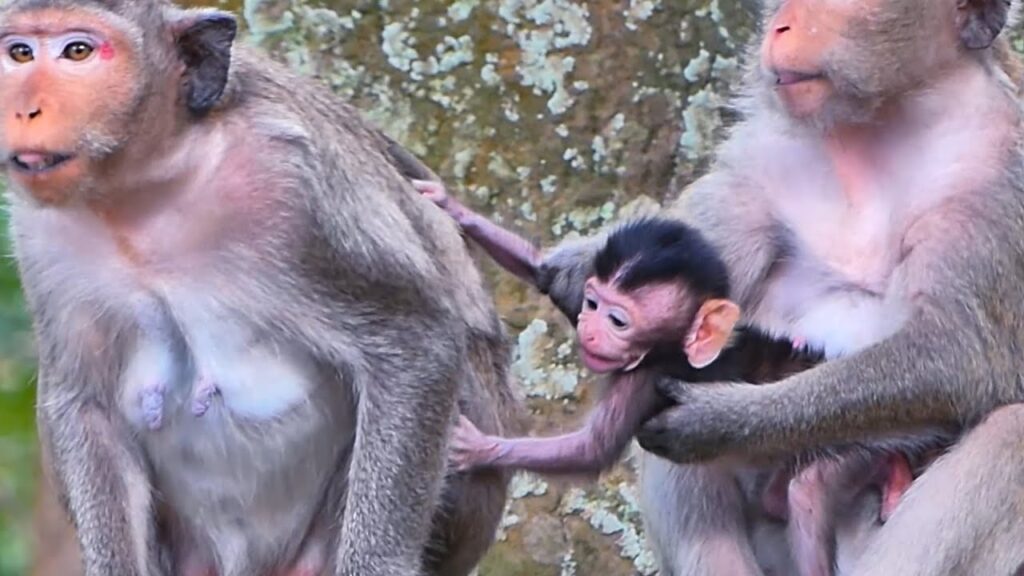
The baby monkey held on gently, eyes half-open, drinking milk in slow, steady rhythm. Each small movement felt deliberate, as if the world beyond that moment didn’t exist. The mother didn’t shift or look away. She simply remained present, offering warmth and patience.
As minutes passed, the baby’s grip softened. Tiny fingers loosened, breaths grew slower, and the forest seemed to breathe along with them. Birds called in the distance, but nearby, everything felt hushed—as if nature itself was protecting this peaceful exchange.
What stood out most wasn’t just the act of nursing, but the sense of safety. Anyone watching could recognize it instantly. It reminded me of early mornings at home, when the world is quiet and a child drifts back to sleep in familiar arms. There was something deeply universal in that scene—a bond that crosses species and borders.
Eventually, the baby monkey’s eyes closed fully. Milk dripped slowly as sleep took over. The mother adjusted just slightly, ensuring her baby wouldn’t slip. No drama. No urgency. Just care.
Standing there, I felt like a guest in a private moment—one that happens every day in the forest but is rarely noticed. In a fast-moving world, this was a reminder that love often shows itself in stillness.