Morning in the forest around Angkor Wat usually unfolds slowly. The tall trees filter the sunlight into soft green patterns, and the monkeys move through the branches with the quiet rhythm of a place that has existed this way for centuries.
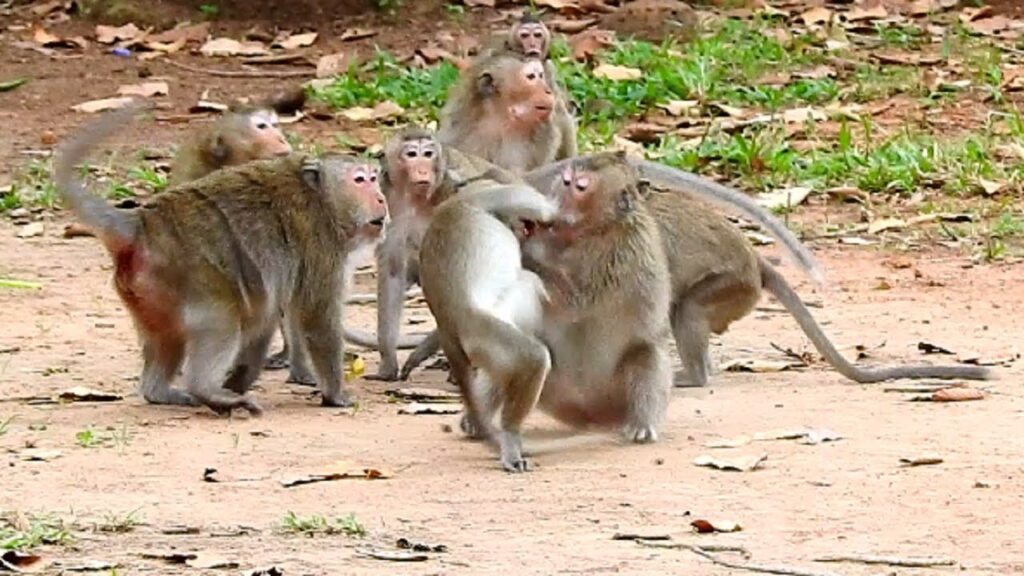
On this particular afternoon, the troop seemed relaxed. Young monkeys climbed low branches, chasing each other in playful circles. Older members sat nearby, calmly observing the movement around them.
Then something shifted.
At first it was only a sound—one sharp call that cut through the air. A few heads turned. The troop paused, as if everyone had noticed something at the same time.
Two monkeys moved closer to one another on a low branch. Their bodies stiffened, tails flicking with quick energy. The calm atmosphere changed almost instantly.
Within seconds, the tension spread across the group.
Several monkeys rushed toward the scene, not always to fight, but to watch, to react, to protect their place in the group. Branches shook. Leaves fell gently through the air.
To someone unfamiliar with monkey society, the moment might seem confusing. But within the troop, these bursts of energy are part of a complicated social language.
Sometimes it begins with a disagreement over food. Sometimes it is about space. And sometimes it is simply the way a troop reorganizes itself.
What stood out most was the reaction of the younger monkeys.
One small baby clung tightly to its mother’s side, eyes wide as the troop moved around them. The mother stayed still, holding her ground, watching carefully. Her calm seemed to tell the baby that everything would settle again soon.
And slowly, it did.
The quick bursts of movement faded as fast as they began. A few monkeys climbed higher into the trees. Others returned to grooming, sitting close together as if nothing unusual had happened.
The forest regained its gentle rhythm.
Moments like this remind visitors that the monkeys living around Angkor’s ancient temples are not just playful animals we often see in photos. They live in complex families, where relationships and emotions shape daily life.
Conflict, even brief conflict, is part of how those relationships stay balanced.
As the afternoon sun lowered behind the tall trees, the troop scattered across the canopy again.
The baby that had watched everything so carefully now rested quietly against its mother’s chest.
And just like that, the forest returned to peace.