The morning light filtered softly through the tall trees surrounding Angkor Wat, turning the forest floor into a quiet patchwork of gold and shadow. I had been sitting still for nearly an hour when I noticed her—a small baby monkey pressed gently against her mother’s side.
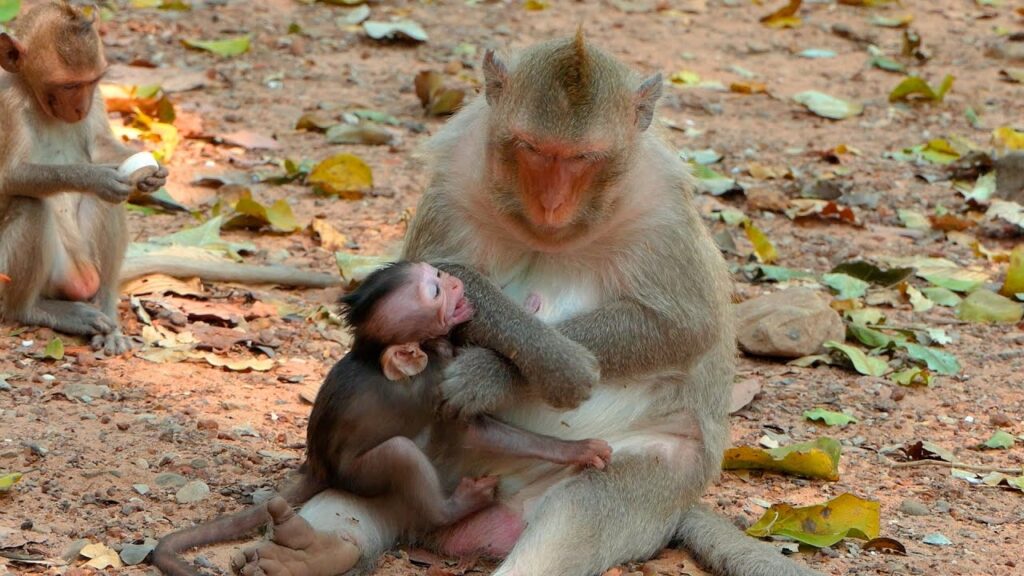
She wasn’t crying. She wasn’t frantic. She simply leaned forward, searching.
Her tiny fingers curled into her mother’s fur as she nudged softly, hoping for milk. It wasn’t hunger alone that guided her. It felt more like habit. Comfort. A memory of warmth.
The mother shifted slightly.
Not rejecting her—but not fully offering, either.
Weaning is never loud in the wild. It’s subtle. A mother begins to shorten the moments. She allows a few seconds, then gently moves away. She encourages independence not with force, but with patience.
The baby tried again.
This time, her mother looked down at her with calm, steady eyes. There was no tension. Just awareness. The baby managed a small sip before the mother repositioned herself and began grooming instead—redirecting affection, guiding the next stage.
It reminded me of something deeply human.
In homes across America, parents quietly navigate these same transitions. The last bedtime story. The last hand-held walk into school. The quiet realization that growth happens whether we’re ready or not.
The baby monkey eventually stopped trying. She sat upright, blinking in the morning light. Then, slowly, she began to explore—touching a fallen leaf, watching an older juvenile climb.
Her mother stayed close.
Not pulling her back.
Just watching.
And that was the most powerful part.
Letting go isn’t abandonment. It’s trust.
In the forest surrounding Angkor Wat, this quiet lesson unfolded without words. A mother carefully balancing love and independence. A baby learning that comfort doesn’t disappear—it simply changes shape.
And as I sat there, I realized that growing up is not a single moment. It’s a series of gentle shifts.