The first thing you notice about Bobby is not how famous he is—it’s how calm he remains despite it.
In the early morning light of the Angkor Wat forest, I watched as Bobby sat on a warm stone ledge, his posture relaxed, his eyes half-aware of the movement around him. One by one, other monkeys appeared. Some approached slowly. Others paused at a distance, as if unsure whether they were allowed this close to him. Bobby didn’t move. He didn’t need to.
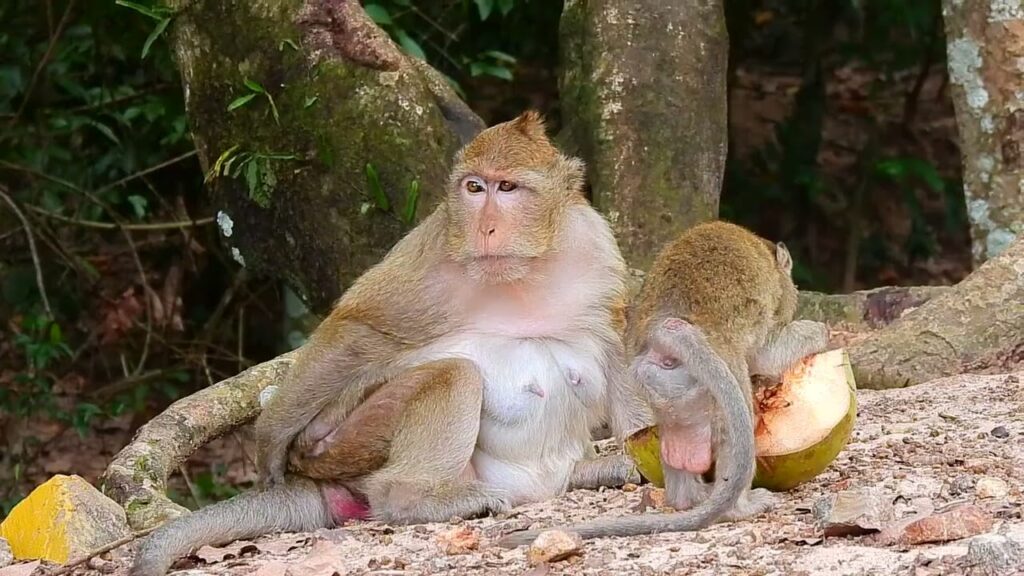
There was no dominance in his presence, no tension. Just familiarity.
Over time, I began to understand why Bobby had become someone others wanted to see. He wasn’t loud or demanding. He didn’t chase attention. Instead, he carried himself with a steady confidence that seemed to invite trust. Younger monkeys lingered near him, glancing up before sitting down. Older ones passed by calmly, acknowledging him with brief looks, like greeting an old friend.
I saw a small group arrive together—three juveniles and one adult female. They stopped when they noticed Bobby, then slowly came closer. One of the younger ones tilted his head, studying Bobby as if trying to memorize him. Bobby responded by simply shifting his position to make space.
That moment stayed with me.
In the forest, where survival often demands alertness and distance, Bobby had become a place of ease. Other monkeys didn’t come to challenge him—they came to observe, to sit nearby, to feel grounded. It reminded me of the people in our own lives who don’t seek attention but somehow become the center of it, simply by being steady and kind.
As the day warmed, more monkeys passed through. Some stayed briefly. Others rested longer. Bobby remained where he was, calm as ever, like a quiet landmark in the forest.
Watching him, I realized that fame doesn’t always look loud. Sometimes, it looks like stillness. Sometimes, it’s simply being someone others feel safe around.
And in that way, Bobby wasn’t just known—he was trusted.