The forest near Angkor Wat was unusually calm that morning. Sunlight filtered through the tall trees in soft, broken lines, and the air carried the gentle sounds of birds and distant movement. On a low branch, a young monkey sat still—more still than usual—with his little brother pressed closely against his side.
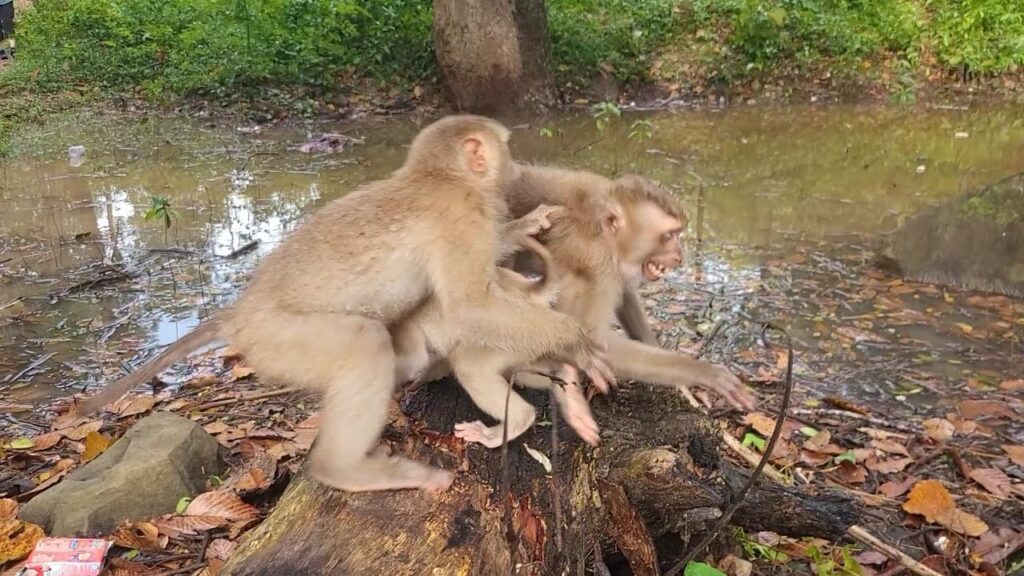
The younger one was small, still unsure of his balance, his hands gripping his brother’s fur with instinctive trust. Every time he shifted, the older brother adjusted his position, carefully, patiently, as if he understood that steadiness mattered more than play right now.
I watched as the older brother scanned the surroundings. He wasn’t distracted. He wasn’t restless. His attention stayed on the baby—one arm loosely wrapped around him, the other ready to steady him if he slipped. When the little one leaned too far, the older brother gently pulled him back, not roughly, not urgently—just enough.
There was no drama in the moment. No sudden danger. Just care.
When the baby monkey grew tired, his movements slowed. His head rested against his brother’s chest, and the older one leaned slightly forward, creating a quiet shelter with his body. The forest continued around them, but for those few minutes, their world felt small and complete.
What stood out most wasn’t instinct—it was awareness. The older brother noticed everything: the baby’s breathing, his grip, his unease. He didn’t wander off. He didn’t test the branches. He stayed.
In human terms, it felt familiar. Like an older sibling who understands—without being told—that responsibility sometimes means choosing stillness over freedom. Choosing presence over curiosity.
As the baby drifted into a light rest, the older brother remained awake, eyes open, alert. He seemed to know that his role hadn’t ended just because the moment was quiet.
In the Angkor Wat forest, moments like this happen without an audience, without praise. But when witnessed, they remind us that care doesn’t need instruction. Sometimes, it simply appears—steady, gentle, and deeply real.