The forest near Angkor Wat was calm that afternoon, the kind of calm that carries small sounds far—leaves brushing together, distant birds, and the soft movements of monkeys navigating their shared space. I noticed Rose sitting slightly apart from the others, holding her food close. Her posture was alert, not aggressive, but careful.
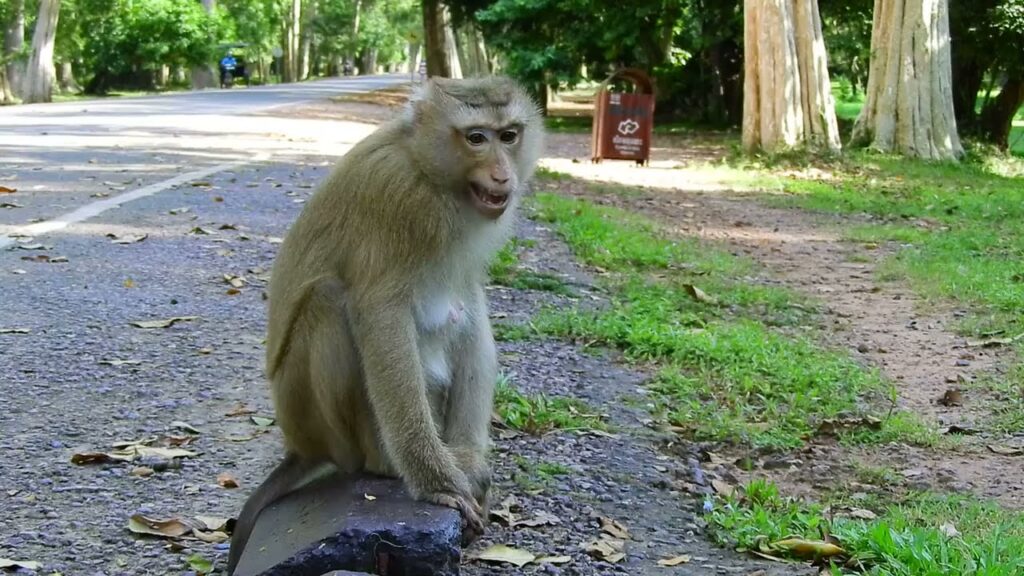
Rose is a mother. That fact shows not only in the way she moves, but in the way she decides. As she ate, her eyes kept lifting, checking the space around her. When another monkey stepped too near, she paused. Not out of anger—but out of instinct. She knew that if someone came closer, she would lose part of her meal.
This wasn’t greed. It was survival.
Food in the forest isn’t guaranteed, and mothers like Rose carry an invisible weight. Every bite matters—not just for her, but for the little life that depends on her strength. I could see it in the way she adjusted her grip, turning slightly so her meal stayed hidden. She didn’t chase others away. She simply protected what she had.
Nearby, younger monkeys played without worry. They hadn’t yet learned how quickly food can disappear, or how being distracted for just a moment can mean going hungry later. Rose knew. Experience had taught her.
What struck me most was her calm. There was no drama, no loud reaction. Just quiet awareness. She ate slowly, patiently, choosing the right moments to continue. When the area cleared, her shoulders relaxed slightly. When movement returned, so did her caution.
Watching her, I thought about how familiar this moment feels. Not just in the forest—but everywhere. Parents everywhere make similar choices every day, often unnoticed. Protecting small necessities. Staying alert. Making sure what little they have lasts long enough.
Rose finished her meal without conflict. When she stood up and moved back toward the group, there was no sign of tension left behind—only another moment of forest life, quietly lived.
It wasn’t a dramatic scene. That’s what made it powerful. Just a mother, a meal, and the unspoken understanding that care sometimes looks like caution.