The forest around Angkor Wat was still waking up when I noticed them.
A small group of monkeys sat scattered beneath the tall fig trees, their movements slow and unhurried. Morning light filtered through the leaves, catching on fur, on eyes, on tiny gestures that most people would overlook. At first glance, it looked ordinary—just another day in the forest. But the longer I stood there, the more I realized something deeper was unfolding.
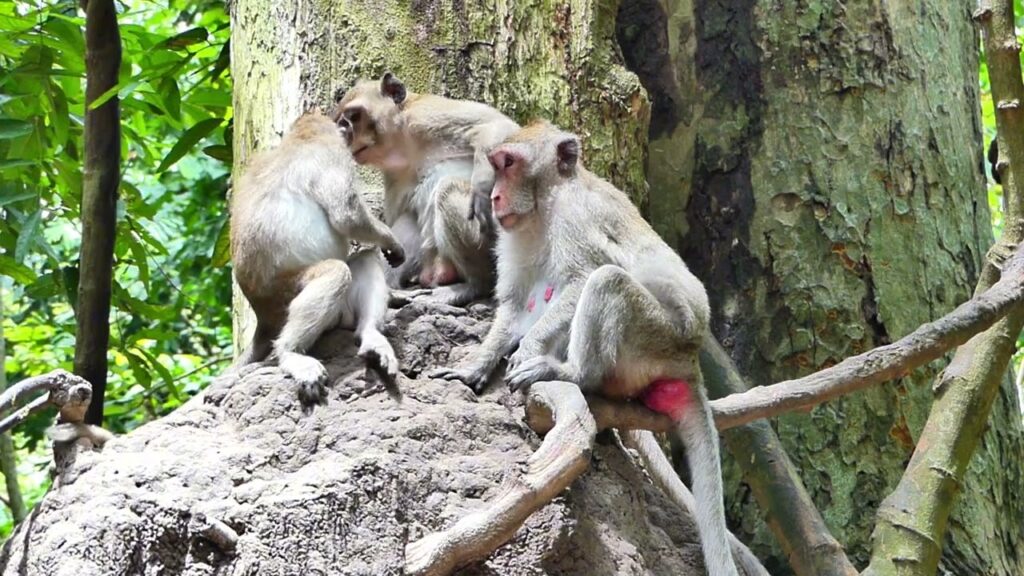
One young monkey edged closer to an older female. He didn’t reach for food. He didn’t play. He simply sat near her, close enough to feel safe but not close enough to interrupt. The older monkey glanced down, then gently adjusted her position, making space. No sound. No display. Just understanding.
Watching them felt strangely familiar.
In that quiet moment, it became impossible not to ask the question we often avoid: Do monkeys feel the way we do? Not in words, of course—but in presence, in comfort, in unspoken rules that hold a group together.
Nearby, another monkey groomed her companion with careful attention, pausing when the other shifted, continuing only when the tension eased. Grooming wasn’t just about cleanliness—it was reassurance. It was connection. It was saying, I see you. You matter here.
Humans like to believe emotions belong to us alone. But standing there, I saw patience. I saw empathy. I saw social awareness that didn’t need explanation. These monkeys weren’t reacting randomly; they were responding to one another with intention shaped by trust and experience.
There was no dominance on display. No conflict. Just a shared understanding of boundaries—who sits where, who waits, who offers comfort, and who needs space. The forest had its own social code, written not in rules but in behavior passed down through generations.
As the sun rose higher, the group slowly began to move. One monkey lingered, looking back until the last member followed. No one was left behind. It wasn’t dramatic. It didn’t need to be.
Moments like this don’t ask for attention. They invite reflection.
Watching these monkeys, I realized how often we rush past quiet emotional truths—both in nature and in ourselves. We label animals as instinct-driven, yet here they were, navigating relationships with sensitivity and restraint that felt unmistakably familiar.
Maybe the question isn’t whether monkeys feel like us.
Maybe it’s whether we’re finally paying attention.