The forest around Angkor Wat wakes slowly, almost respectfully. Before the sun reaches the ancient stones, the trees breathe first. I was standing quietly beneath a tall fig tree when I noticed them — the monkeys, already awake, already aware.
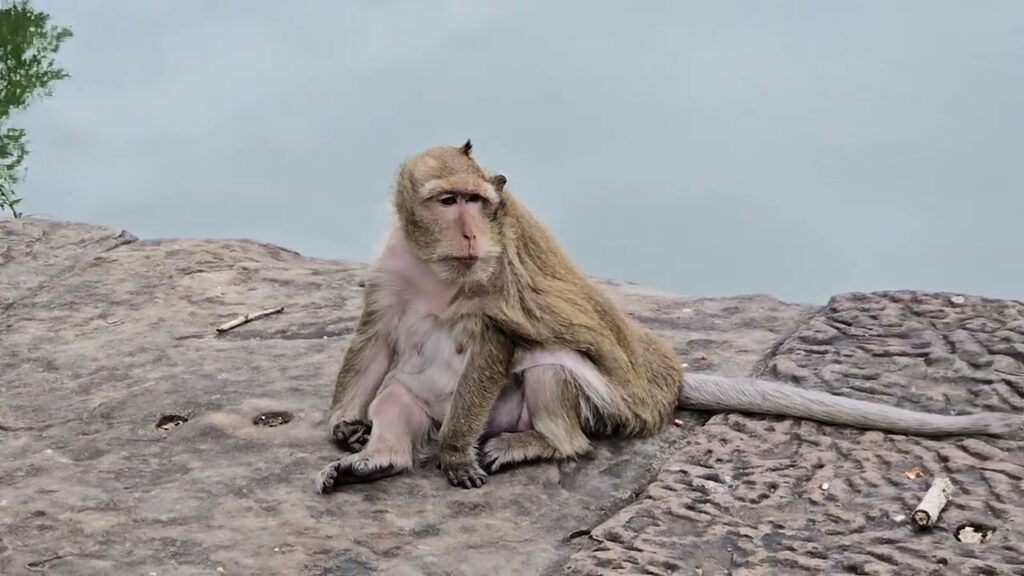
They didn’t rush. They never do.
A mother sat high on a low branch, her baby pressed into her chest, fingers curled tightly into her fur. Below her, two younger monkeys explored fallen leaves, turning them over as if searching for something forgotten overnight. Their movements were soft, unhurried, like they understood that the morning deserved patience.
I had come many times before, but this morning felt different. The forest felt like it was listening.
As the light filtered through the canopy, the monkeys began to move closer together. Not in fear — in familiarity. One paused to groom another. A baby climbed, slipped, then steadied itself with surprising calm. No alarm. No drama. Just learning.
This is what makes the monkeys of Angkor Wat so remarkable. They live among history, but they behave entirely in the present moment. Every sound, every touch, every glance is purposeful but gentle.
I watched as a mother adjusted her position so her baby could nurse more comfortably. She looked down briefly, not at me, but at the forest floor — as if checking that the world below was safe enough to continue. That quiet check stayed with me.
There’s a common idea that wild places are loud and chaotic. But here, among the ruins and roots, the monkeys move with an understanding that feels almost human. They know when to pause. They know when to wait.
As the sun finally broke through, the forest shifted. Birds grew louder. The monkeys stretched, climbed higher, and slowly disappeared into the trees. The moment passed, but the feeling didn’t.
Standing there, I realized this wasn’t just a morning routine. It was a reminder — that peace doesn’t require silence, only presence.
And the monkeys of Angkor Wat practice that every single day.