The Angkor Wat forest is never truly silent. Even in its calmest moments, there’s a soft rhythm of leaves shifting, distant calls echoing through stone ruins, and life quietly moving forward. On this particular morning, that rhythm seemed to pause around one small figure.
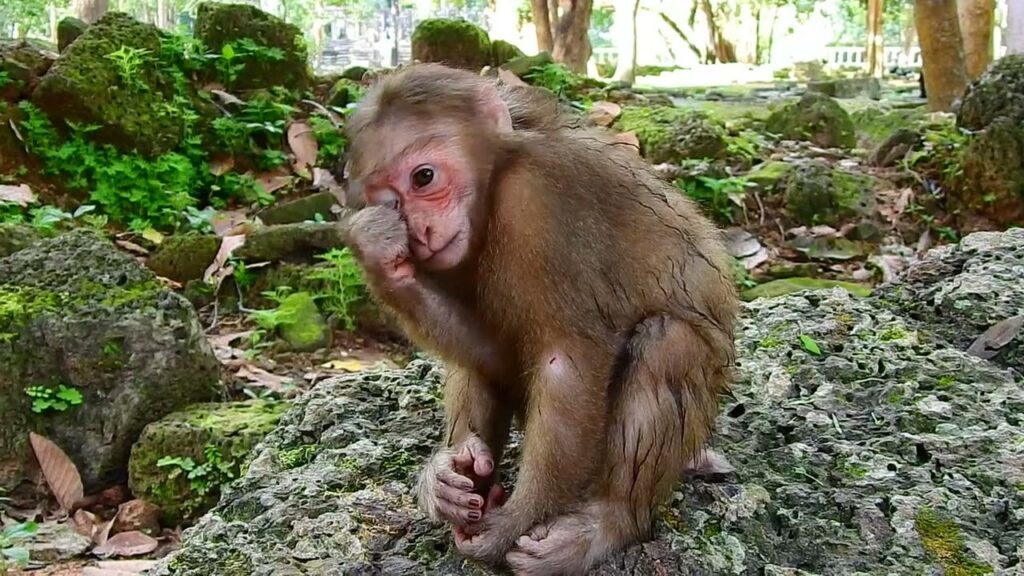
A baby monkey sat alone on a low branch, no higher than a person’s shoulder. His fur was still thin, his movements unsure. He wasn’t crying. He wasn’t calling out. He simply sat there, gripping the bark with both hands, breathing in the warm air as if gathering courage one breath at a time.
Nearby, his mother watched from a distance. Not far — just far enough. She didn’t rush to him, and she didn’t turn away. Her eyes followed every movement, every sway of his small body as he tested his balance. This wasn’t abandonment. It was trust.
Moments like this are easy to miss. To an untrained eye, it might look like nothing is happening. But anyone who has spent time in this forest knows better. Growth here is rarely loud. Strength often arrives quietly.
The baby shifted his weight and nearly slipped. His fingers tightened. For a second, his body froze — not in fear, but in focus. Then he steadied himself. No applause followed. No dramatic rescue. Just the steady continuation of the moment.
Watching him, it was impossible not to think of how often strength looks like this in our own lives. Not the big speeches. Not the sudden victories. Just staying where you are, even when it feels uncomfortable. Holding on. Breathing through it.
The mother finally moved closer, settling on a nearby root. She didn’t touch him, but her presence changed everything. The baby glanced toward her, then back at the branch beneath him. Reassured, he took another small step.
In the Angkor forest, hope doesn’t announce itself. It appears in small decisions — to stand, to try again, to remain open to the next moment. This baby monkey didn’t know he was teaching anyone anything. He was simply learning how to exist in the world he’d been born into.
And somehow, that was enough.