The forest near Angkor Wat was unusually calm that morning. Sunlight filtered through ancient trees, landing softly on the moss-covered stones where generations had passed—humans and animals alike. Sitting beneath one of those trees was Old Father Charlie Monkey, his posture slow but steady, his eyes reflecting years the forest itself could remember.
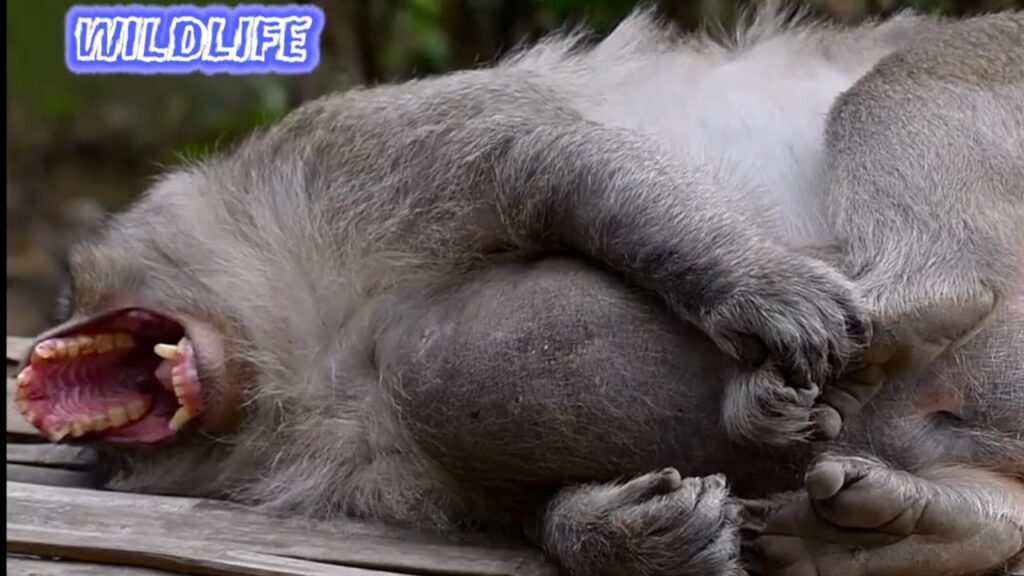
Charlie no longer moved with the speed of the younger monkeys. His fur had thinned, his steps were careful, and yet there was something unmistakably strong about him. Younger monkeys passed by, sometimes pausing, sometimes watching. No one pushed him aside. No one rushed him. In this forest, respect was understood without sound.
I watched as Charlie reached for a piece of fruit left behind by the group. His hands trembled slightly, but his grip was sure. He took his time, chewing slowly, as if every bite carried memory. There was no struggle in his face—only patience. It felt as though he knew that slowing down was not weakness, but wisdom.
From where I stood, the moment felt deeply familiar. In the U.S., many of us recognize this quiet strength in our fathers or grandfathers—the way they sit back now, observing more than speaking, holding stories they no longer need to explain. Charlie reminded me of those men: still present, still meaningful, even when the world moves faster around them.
A younger monkey approached him, hesitated, then sat nearby. No touching. No noise. Just company. Charlie didn’t turn his head, but his body softened, as if he felt the presence without needing to look. That small interaction said everything about his place in the group.
The Angkor forest didn’t rush him. The light didn’t rush him. And in that stillness, Charlie felt timeless.
There are moments that don’t ask for attention. They simply exist—and stay with you long after. Watching Old Father Charlie was one of those moments.