The morning light slipped quietly through the tall trees surrounding Angkor Wat, settling softly on the stone paths and roots that had been walked for centuries. In that calm space, a young mother monkey paused, and her baby paused too—just a breath behind her, watching everything.
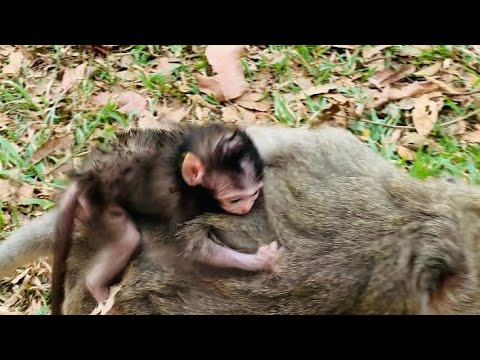
He was still small enough that his movements felt careful, deliberate. Each step seemed less about getting somewhere and more about learning how to be there. His mother didn’t rush him. She moved slowly, occasionally stopping, as if aware that she was being studied.
When she reached for a leaf, he leaned forward. When she sat back on her haunches, he mirrored the posture, wobbling slightly before finding balance. There was no instruction, no correction—just quiet example. The lesson wasn’t spoken. It was lived.
The forest around them was alive but unhurried. Birds called from above. Insects hummed in the background. Ancient stones stood silently, holding the morning cool. In this setting, the baby learned not through pressure, but through presence.
At one point, the mother adjusted her position on a root, choosing a steadier spot. Her baby tried the same root, slipped, then tried again. She didn’t intervene. She simply stayed close. That closeness seemed to be enough.
What stood out most wasn’t what the baby did—it was how carefully he watched. His eyes followed her hands, her posture, her pauses. Every movement became information. Every still moment became reassurance.
For those of us watching from a respectful distance, it felt familiar in a deeply human way. Learning doesn’t always come from being told what to do. Often, it comes from being near someone we trust and observing how they move through the world.
As the sun climbed higher, the mother began to move on. The baby followed, still slightly behind, still watching. Not because he was being guided—but because he wanted to understand.
In that quiet stretch of forest, beneath trees older than memory, learning happened the way it always has: slowly, gently, and side by side.