The forest beneath Angkor Wat was unusually still that morning. Sunlight filtered through the high branches, landing softly on moss-covered stones and winding roots that had held centuries of footsteps. In that quiet space, a very small baby monkey clung to its mother’s side, pressing close in a way that felt more hopeful than certain.
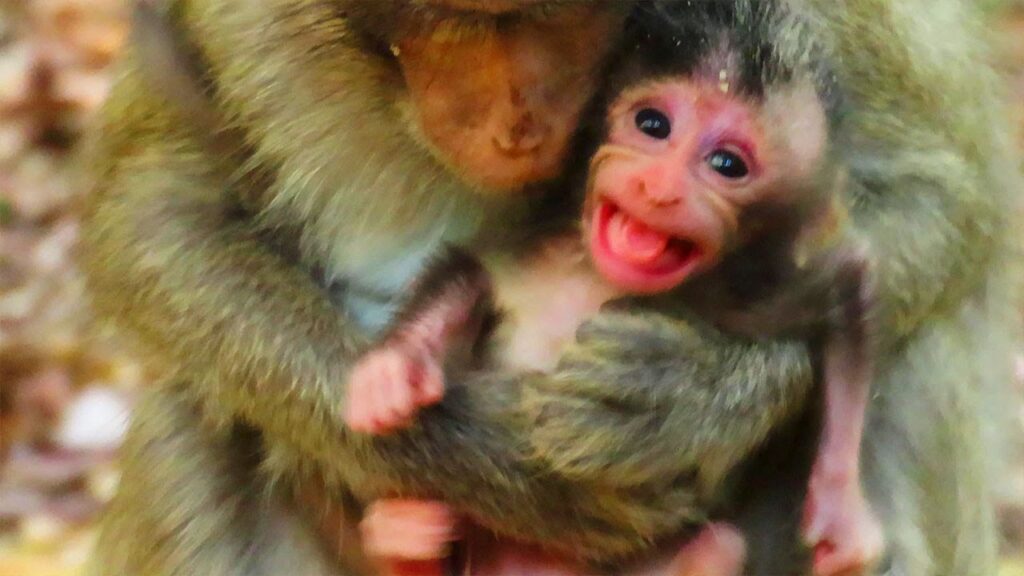
The baby reached again—small fingers curling gently into fur—seeking warmth, reassurance, something familiar. But the mother did not respond the way we often expect. She shifted slightly, her attention elsewhere, her body present but distant. It wasn’t harsh. It wasn’t dramatic. It was simply absence, and that absence spoke louder than sound.
From where I stood, it was impossible not to feel the weight of that moment. The baby wasn’t crying. There was no panic. Just a pause. A quiet waiting. The kind of waiting that happens when instinct meets uncertainty for the first time.
In the wild, love doesn’t always look the way humans imagine it should. Mothers carry histories we cannot see—fatigue, stress, the constant need to survive. This mother’s stillness may have been protection, or exhaustion, or something shaped by days we didn’t witness. Yet for the baby, the moment was new. The lesson came early: comfort is not always guaranteed.
The baby eventually settled beside her, curling into itself beneath the ancient trees. Not defeated—just learning. The forest went on breathing around them, cicadas humming softly, leaves shifting overhead as they have for generations.
There was something deeply human in that scene. Anyone who has ever reached for reassurance and found only silence understands that feeling. And yet, life continues. The baby remained close. The mother remained near. Not loving less—just differently.
In the Angkor Wat forest, moments like this pass without ceremony. No one names them. No one explains them. They simply become part of growing up beneath the trees.
And sometimes, witnessing is enough.