The forest was already awake, but quietly so. Morning light filtered through the tall trees near Angkor Wat, brushing the stone ruins with a soft gold that felt almost deliberate. I noticed them just beyond a line of roots—one mother monkey resting against the trunk, her baby pressed close to her chest.
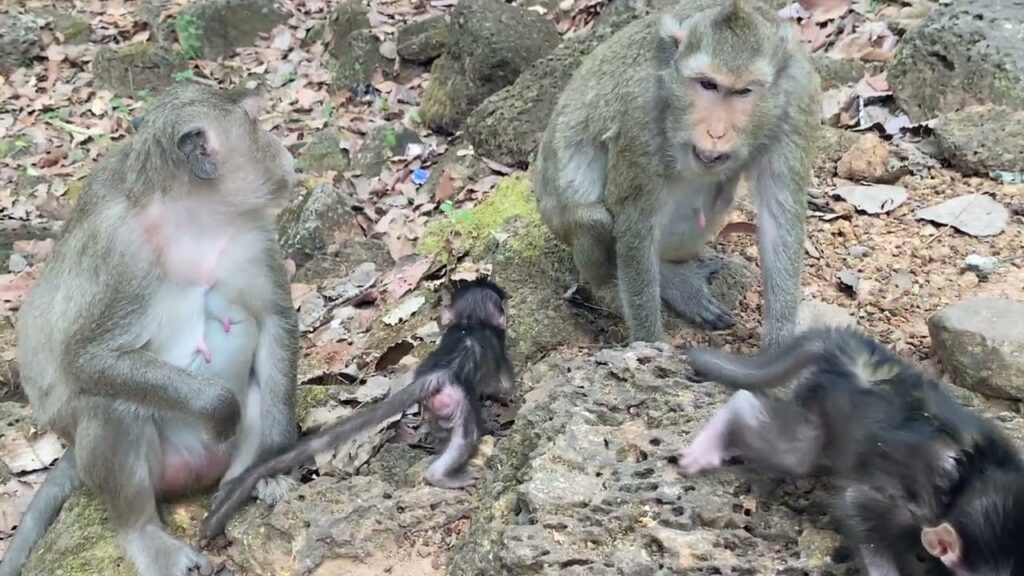
At first, there was movement. Small, uncertain. The baby’s fingers clutched tightly at her fur, not in fear, but in instinct. Every sound—the rustle of leaves, distant bird calls, even footsteps far away—seemed to pass through that tiny body before settling.
The mother didn’t rush him.
She sat still, breathing slow, her eyes scanning the forest in a way that spoke of long experience. Every so often, she lowered her head slightly, as if listening to something only she could hear. Her hand rested on her baby’s back, steady and warm.
Minutes passed. Then more.
Gradually, the baby’s grip softened. The tension in his shoulders eased. His head tilted, resting fully against her. It was a moment so subtle you could almost miss it—but once you noticed, it stayed with you. Trust wasn’t taught. It was felt.
This wasn’t about protection alone. It was about presence.
She didn’t groom him. She didn’t move him. She simply stayed. And in that stillness, the baby learned something no lesson could teach—that safety doesn’t always come from action. Sometimes it comes from knowing someone won’t leave.
When his hand finally relaxed completely, falling open against her fur, the forest seemed to pause with him.
That was the moment I realized why scenes like this matter so deeply to us. We recognize ourselves in them. The need to feel held without being managed. The relief of letting go.
In the ancient forest surrounding Angkor Wat, love didn’t announce itself. It whispered—and it stayed.