The Angkor Wat forest was warm and steady that morning, filled with familiar movement and sound. Sunlight touched the ancient stones while the troop rested nearby, grooming, feeding, and settling into the rhythm of the day.
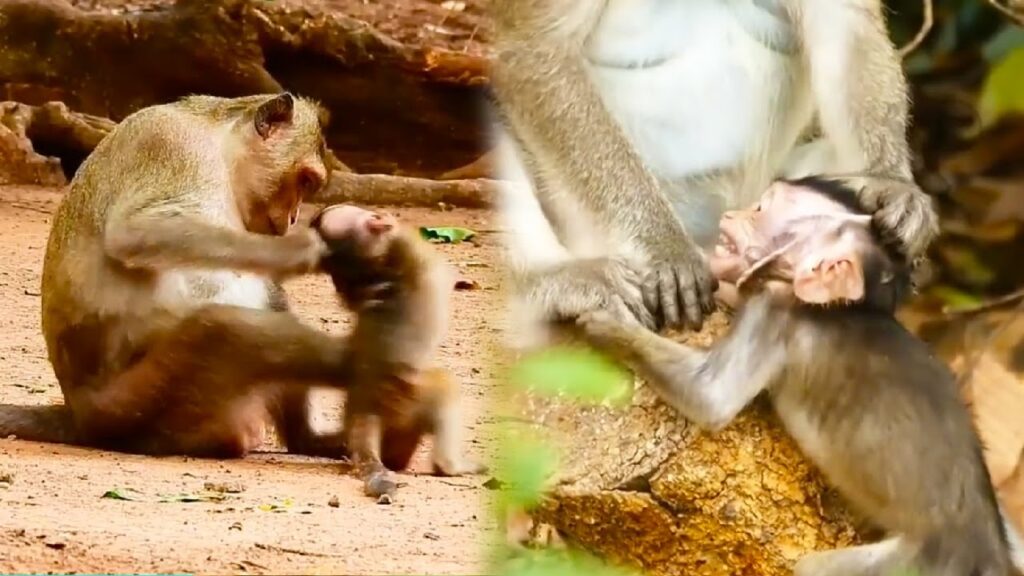
A baby monkey stayed pressed close to her mother, as she always had.
She reached for milk with the same instinct she had relied on since her earliest days. Her movements were soft and trusting, guided by habit rather than urgency. But her mother gently turned away, shifting her body just enough to block access.
The baby paused, then tried again.
This time, the mother’s response was firmer—not aggressive, not angry, but clear. She placed a hand between them, maintaining calm eye contact, holding her ground. The baby froze, confused by a response she had never known before.
From where I stood, it was easy to misunderstand the moment.
To a human eye, it might look unkind. But in the wild, weaning is not rejection—it is preparation. Mothers must help their young learn to rely on more than one source of comfort and nourishment. It is never sudden, and it is never without purpose.
The baby shifted closer anyway, resting her head against her mother’s chest. She stayed there, fingers tangled in fur, breathing slowly. Though milk was withheld, closeness was not.
Her mother remained still.
She groomed her baby lightly, offering reassurance without feeding. This balance—firm boundaries paired with presence—is how independence begins in the forest. The baby didn’t leave. She didn’t cry out. She stayed, learning quietly.
Around them, life continued. Other monkeys passed by. Leaves fell. The forest did not pause, yet the moment felt deeply personal.
After some time, the baby pulled back, distracted by movement nearby. She explored a branch, then returned, sitting beside her mother instead of clinging to her. Something had shifted.
In Angkor Wat, growth often looks like this—not dramatic, not loud, but steady and necessary. The baby hadn’t lost her mother’s care. She had simply reached the next stage of it.