The morning light arrived slowly, as if it didn’t want to interrupt anything. It filtered through the tall trees surrounding Angkor, touching stone walls that had watched centuries pass in silence. Before any human voices entered the forest, the monkeys were already awake.
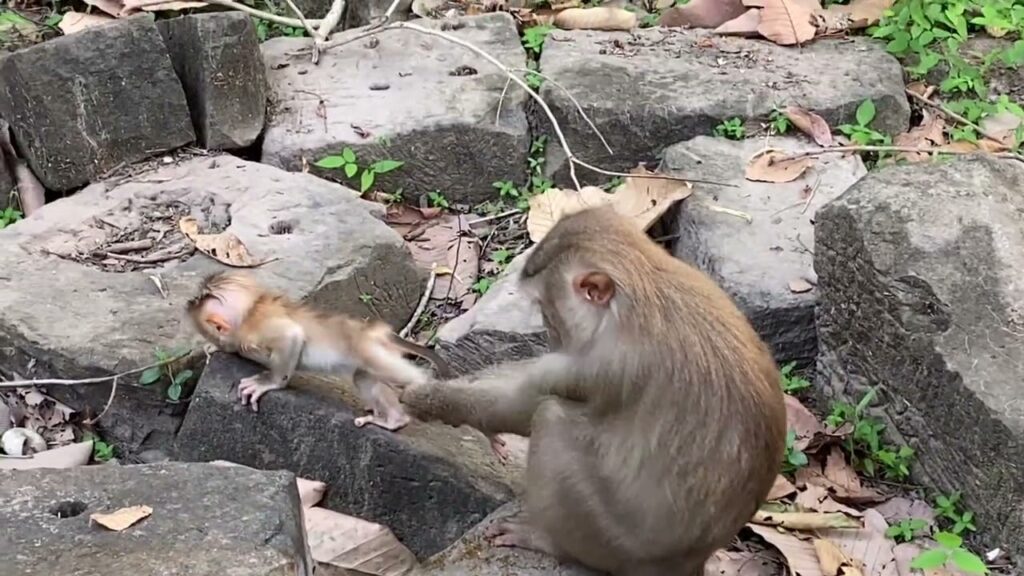
They moved with a confidence that felt inherited rather than learned. One small group gathered near the roots of an old tree, pausing as if listening—to birds, to wind, or maybe to something older than all of it. A young monkey climbed carefully, stopping every few steps to look back at its mother. She didn’t rush. She simply watched, calm and steady, letting the moment unfold on its own time.
What makes the monkeys of Angkor so amazing isn’t just their presence—it’s how naturally they belong. There’s no performance here. No awareness of being watched. Just daily life continuing in a place where history and nature quietly coexist.
As the sun rose higher, more monkeys appeared, crossing paths without urgency. Some groomed each other beneath broken stones. Others sat alone, gazing into the forest like thoughtful elders. A baby clung to its mother’s side, fingers curled gently into her fur, eyes half-open with curiosity rather than fear.
Standing there, it felt impossible not to slow down. The monkeys weren’t doing anything extraordinary, yet everything about them felt meaningful. They reminded you that life doesn’t need noise to be full. It needs presence. It needs patience.
Angkor Wat is often described as ancient and grand—but in moments like this, it feels alive. The monkeys are part of its breath. They move through the ruins not as visitors, but as keepers of an ongoing story, written quietly each morning.
When people say, “Wow, so amazing,” it isn’t about surprise. It’s about recognition. About realizing you’re witnessing something gentle and real—and that it’s been happening long before you arrived, and will continue long after you leave.