In the soft morning light of the Angkor Wat forest, the air felt unusually still. The tall roots of ancient trees held shadows that moved gently across the ground, as if the forest itself was watching a quiet family moment unfold.
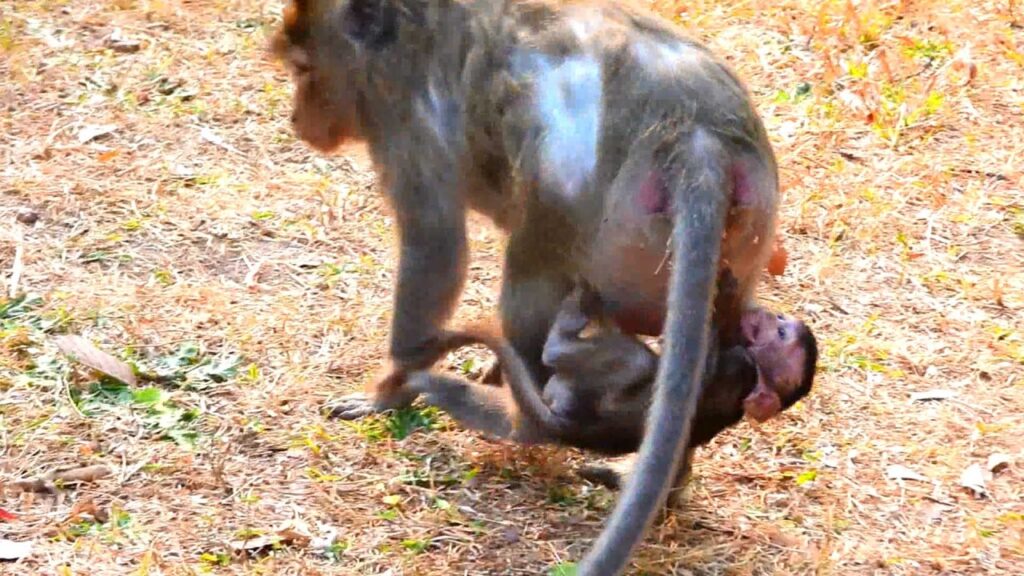
Ada, a young mother monkey, sat calmly on a low branch. Her baby clung closely, as it always did, finding comfort in the warmth and rhythm of her presence. But something felt different today.
The baby tried to nurse again, reaching with small, familiar movements. Ada hesitated. She did not push away, but she did not respond in the same way either. Her eyes were calm—almost reflective—like she understood something her baby did not yet know.
Growth had arrived quietly.
Nearby, a close companion in the troop noticed the interaction. The friend moved closer, sitting on a nearby branch, observing carefully. Not interrupting. Not forcing. Just being present.
This presence mattered.
Sometimes in the monkey world, friendships are not loud or dramatic—they are gentle signals, small movements that help guide behavior without breaking emotional bonds.
The baby shifted, confused for a moment, then rested its head against Ada again. Ada softly adjusted her position, offering comfort, but slowly encouraging independence.
The forest breeze passed through the leaves, carrying a feeling of transition—of something natural unfolding without urgency.
There was no struggle. Only understanding.
As the morning continued, the baby eventually settled beside Ada instead of clinging tightly. It was a small change, but deeply meaningful. The friend monkey remained nearby, then slowly moved away, as if acknowledging that the moment had passed successfully.
In the Angkor forest, life is shaped by patience. Mothers teach not only through closeness, but also through gentle distance. Friends support not by control, but by presence.
And in that quiet space between holding on and letting go, something beautiful happens: trust grows stronger than need.