Deep in the quiet morning of the Angkor Wat forest, the sunlight slipped gently through the tall canopy, touching the moss-covered stones like soft gold. The air was still, except for the distant calls of birds and the playful rustling of leaves.
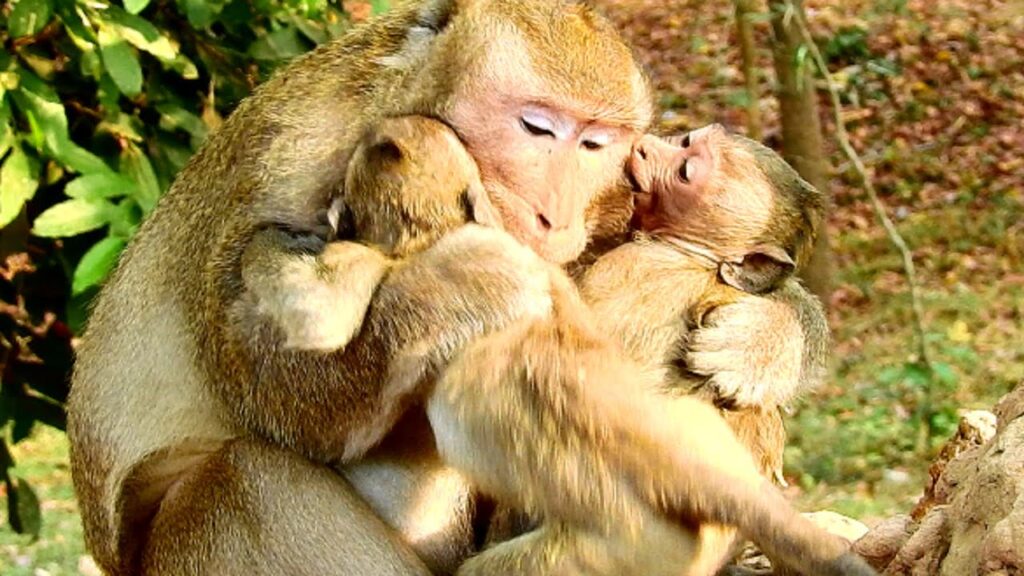
It was here that “Boss Mark,” known among the caretakers as a calm and patient presence, slowly settled down near an ancient stone path. He wasn’t rushing. He wasn’t calling attention. He simply sat, as if the forest itself had invited him to pause.
Not far away, two tiny baby monkeys watched from the safety of a low branch. Their eyes were bright, curious, and uncertain. One of them leaned forward, then pulled back, unsure whether this human figure was friend or stranger.
Mark didn’t move.
Minutes passed like soft breaths in the forest.
Then something gentle happened.
The braver baby monkey stepped down first.
Slowly… carefully… one small step at a time.
The second followed, staying close behind.
They didn’t approach with fear anymore. They approached with curiosity.
Mark reached out his hand—not to grab, not to control—but to offer stillness. The little ones paused, studying him as if trying to understand this quiet language between species.
And then, unexpectedly, one of them sat just a short distance away… close enough to feel safe, but close enough to connect.
The forest seemed to hold its breath.
It wasn’t a moment of spectacle. It was a moment of trust forming in silence.
A reminder that even in the wild, connection doesn’t always come from sound or movement—but from patience.
And in that peaceful corner of Angkor Wat, something unspoken passed between them: curiosity, comfort, and the quiet beginning of trust.