The morning light filtered softly through the tall trees of the Angkor forest, settling gently on the uneven rocks below. It was quiet—just the rustle of leaves and the distant hum of life waking up.
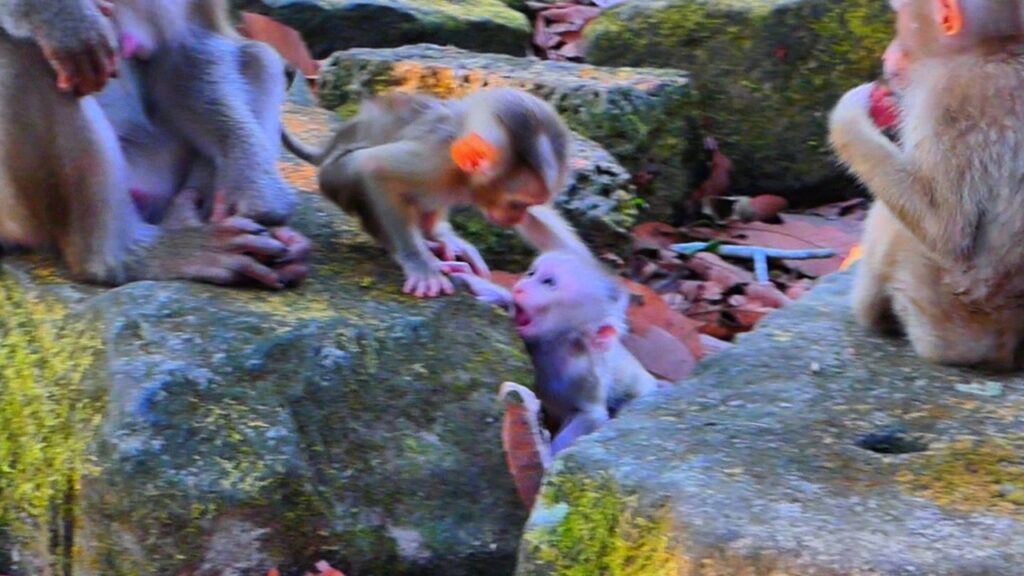
Baby Levy had been playing near a smooth, sun-warmed rock. Like many young ones, curiosity guided every small step. He climbed a little higher than before, pausing only briefly as if testing his courage.
Then it happened.
A slip. A sudden loss of balance. And in one small moment, Levy tumbled down from the rock, landing awkwardly on the ground below.
There was no loud cry—just a startled stillness. His tiny body paused, as if unsure what had just happened.
But he wasn’t alone.
From just a few feet away, another young monkey noticed immediately. Without hesitation, he ran—quick, direct, focused only on Levy. There was no fear in his movement, no confusion. Just purpose.
He reached Levy in seconds.
Gently, he leaned in close, placing himself beside the fallen baby. He didn’t pull or push—he simply stayed. His presence alone seemed to say everything Levy needed to hear: you’re not alone.
Levy shifted slightly, leaning into him. It was subtle, but enough to show trust. The kind of quiet trust that doesn’t need to be taught—it simply exists.
Around them, the forest carried on. Leaves moved softly overhead, and distant calls echoed faintly through the trees. But in that small space beside the rock, time seemed slower.
The young monkey remained close, occasionally adjusting his position as if to shield or steady Levy. There was no urgency now—just calm reassurance.
After a while, Levy began to move more freely. His small hands touched the ground, testing his strength again. And the other monkey stayed right there, watching, ready—but not interfering.
It was a simple moment.
No grand gesture. No dramatic rescue.
Just one small life responding to another with instinctive care.
And in that quiet corner of the Angkor forest, it was enough.