The morning light filtered gently through the ancient trees surrounding Angkor Wat, settling softly on the forest floor. It was the kind of light that didn’t demand attention—it simply existed, warm and steady, like something you could trust.
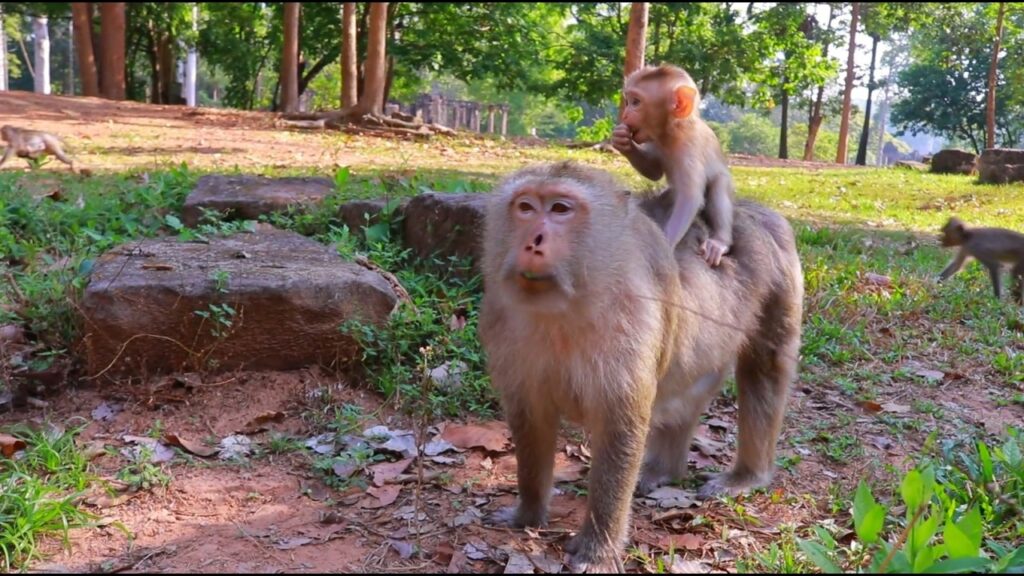
Baby Boris sat close to his mother, Briana, his tiny fingers brushing against the rough roots beneath them. He had been exploring just moments before—curious, energetic, and full of that restless wonder only the very young seem to carry. But something shifted.
Without urgency, Boris turned back.
He reached for her hand.
It wasn’t a dramatic movement. There was no sound, no sudden tension. Just a small, quiet decision—to come back, to reconnect. Briana didn’t move much either. She didn’t need to. Her presence had always been enough.
For a few seconds, the forest seemed to slow.
Boris rested his hand against hers, his body leaning gently into her side. His eyes, still wide with curiosity, softened. Around them, the distant rustle of leaves and faint calls of other monkeys continued, but here, in this small space, everything felt still.
Moments like this often go unnoticed. There’s no urgency, no spectacle. But they carry something deeper—something familiar.
It’s the same instinct seen everywhere, from quiet suburban mornings in the U.S. to the heart of ancient forests: the simple need to feel close to someone who makes the world feel safe.
Briana shifted slightly, just enough to acknowledge him. No dramatic gesture, no overreaction. Just a calm, steady presence. And for Boris, that was everything.
He stayed there for a while.
Not exploring. Not climbing.
Just being close.
And somehow, that felt like the most important thing he could do.