
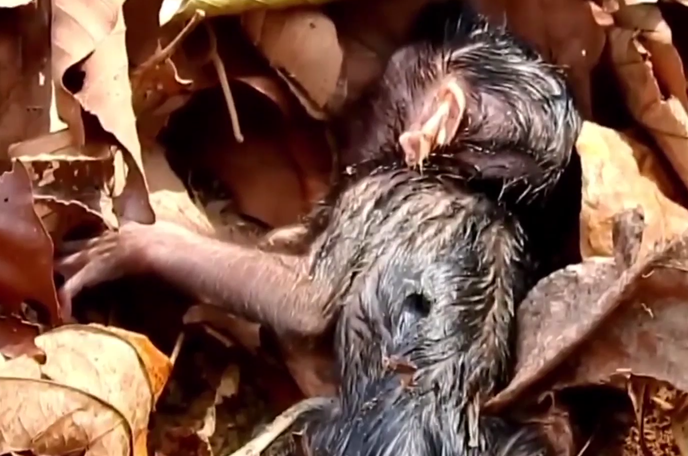
The morning air in the Angkor Wat forest felt unusually still as the first light moved through the trees. Near the roots of a large fig tree, a tiny newborn monkey rested quietly on the ground, barely moving except for small shifts of its hands.
Older monkeys passed nearby, climbing through branches and searching for food. None seemed to stop for long. The newborn looked too young to climb, too small to follow the troop. It stayed where it had been left, occasionally lifting its head toward the sounds above.
From a distance, the scene felt quiet rather than dramatic. The forest continued its normal rhythm. Birds called from the canopy. Leaves moved in the breeze. Yet the small monkey remained close to the same spot for hours, watching movement overhead.
Visitors walking along a distant trail slowed when they noticed the tiny figure beneath the roots. There was something deeply human in the way the newborn waited, not crying loudly, simply remaining close to where it last felt safe.
In the Angkor Wat forest, moments like this unfold quietly. They are not loud or sudden. They are small, patient moments that stay in memory long after the forest grows silent again.